Check your device
Unbox your wallet and make sure its packaging and device look just as they should. Your recovery words should never arrive pre-written.
YOUR FIRST STEPS, MADE CLEAR
A thoughtful starting point for setting up your hardware wallet. Build good habits from the very first connection.
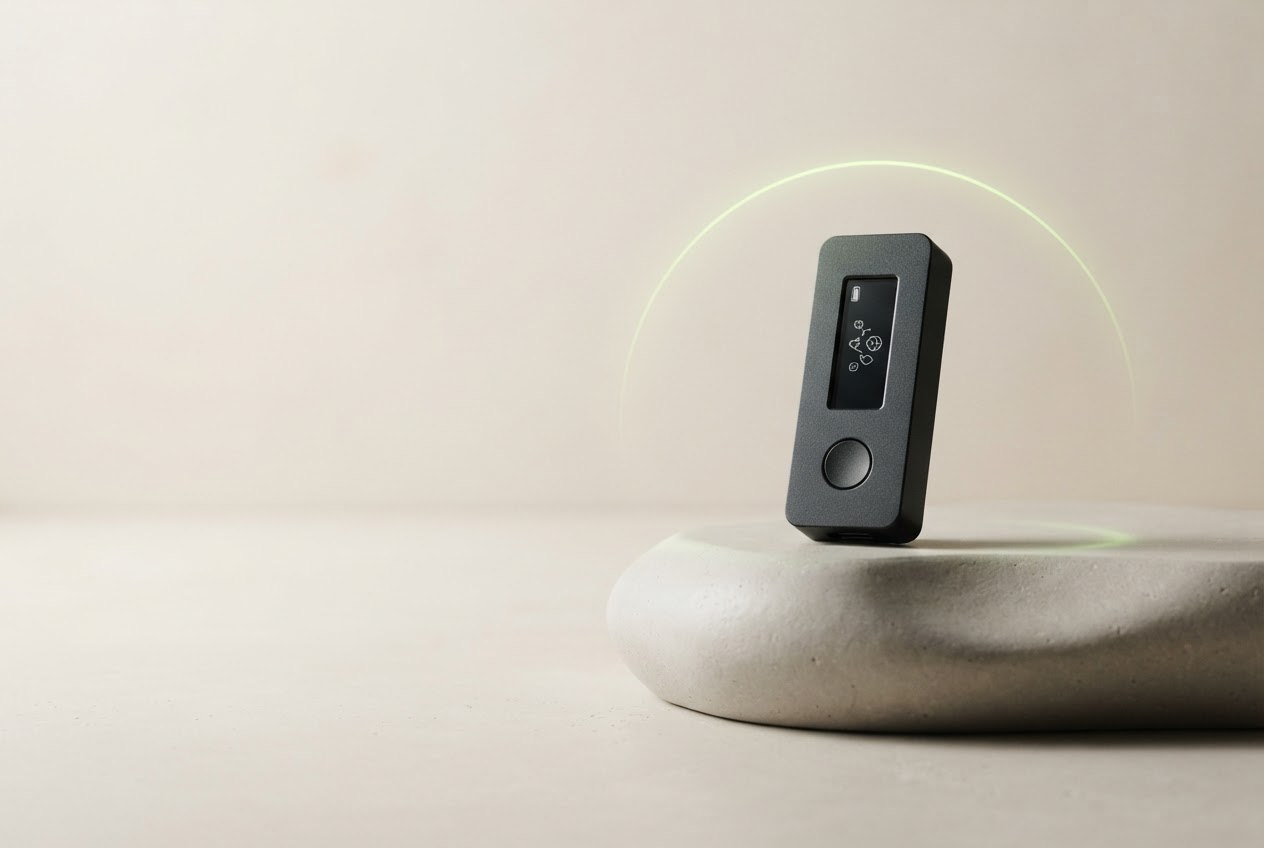
THE STARTING POINT
Take it one step at a time. Keep your recovery information private, and let your device guide the parts that matter most.
Unbox your wallet and make sure its packaging and device look just as they should. Your recovery words should never arrive pre-written.
Go directly to Trezor Suite from the manufacturer’s official website. Verify the address before downloading or connecting your device.
Connect your hardware wallet and follow the on-device prompts to install the latest firmware. Confirm sensitive actions on the device itself.
Write recovery words on the supplied backup material and store them offline in a private, secure place. Never photograph or share them.
A FEW THINGS WORTH REMEMBERING
Your hardware wallet helps keep private keys offline, but your habits are part of the protection too. Slow down, verify, and keep sensitive information to yourself.
THE EVERYDAY CUSTODY JOURNAL
FIELD NOTE 001 / 5 MIN READSimple practices for your first day and every day after.
Taking control of digital assets begins with a small but meaningful shift: you become responsible for protecting the keys that authorize access. A hardware wallet keeps those keys apart from your internet-connected computer, but a secure setup still depends on careful choices.
Start by checking that your device came from a trusted source. Connect it using the manufacturer’s official app, and follow instructions shown on the device screen. If a setup asks you to enter your recovery words into a website, message, or computer prompt, stop. Recovery words are a master backup; keep them private, offline, and somewhere you can access safely.
Before sending cryptocurrency, take a moment to verify the recipient address and amount on your hardware wallet. A familiar-looking screen on your computer is not a substitute for checking the device itself. Keep software current through official channels, and be wary of urgent messages, unsolicited support, or links promising to fix a wallet problem.
Self-custody is not about never making a mistake—it is about creating a routine that makes safer choices easier. Move slowly, keep backups private, and learn before you act. When in doubt, pause and consult verified documentation.
NEED A HAND?
For device-specific instructions, use official support and documentation. Never share your recovery words with anyone.